
When a tooth needs a filling, patients often have two questions: Will it look natural, and will it last? Both are reasonable. Restorative dentistry aims to repair damage while supporting the tooth’s function and appearance.
Materials research continues to improve the options available. At the same time, evidence-based treatment focuses on preserving tooth structure and choosing an approach suited to the individual tooth.
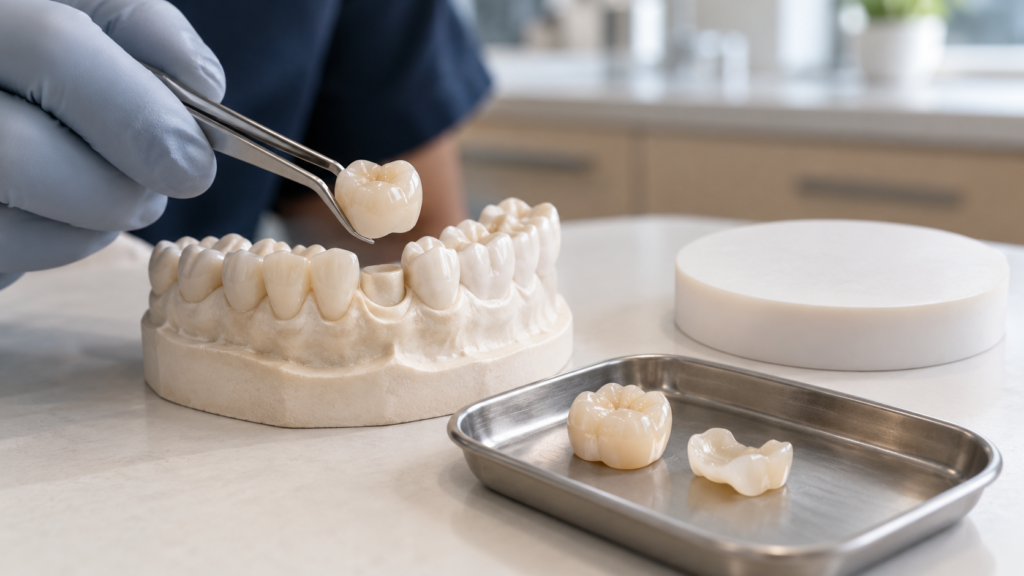
What are tooth-colored fillings?
Resin composites are materials used to create tooth-colored fillings. They contain a resin component and filler particles, and many are hardened using a curing light. Researchers have worked on their composition, curing properties, and shrinkage to improve their performance.[1]
Their appearance is an important benefit, but it is only one consideration. The size and location of the cavity, the demands placed on the tooth, and the clinical situation also matter when discussing a restoration.
Is the newest material always the best choice?
A material’s marketing description cannot tell you whether it is the right choice for your tooth. The ADA’s 2023 restorative guideline provides recommendations for material selection and decay removal in primary and permanent teeth, informed by a systematic review of the evidence.[2]
Rather than looking for one universally superior filling, patients can ask why a particular option is appropriate for their situation.
Why preserving tooth structure matters
Progress in restorative care also involves how decay is treated. In selected teeth, a conservative approach can reduce unnecessary removal of tooth structure and help protect the soft tissue inside the tooth.
The ADA’s June 2023 guideline announcement describes selective decay removal as an effective option for many moderate or advanced cavities. In this approach, the dentist may leave some affected tissue in a deeper area and seal the tooth with an appropriate restoration, reducing the risk of exposing the pulp.[3]
This is a clinical decision for suitable cases. It does not mean every cavity should receive the same treatment.
What should you discuss with your dentist?
Ask which material is being recommended, what alternatives are reasonable, and how much of the tooth can be preserved. You can also ask what maintenance and follow-up the restoration will need.
A thoughtful treatment discussion connects the material, the condition of the tooth, and your priorities. Ask your dentist to explain how those factors shape your options.